Same bill. Same flaws. Why are we here again?
- Phil Friend

- Jun 25
- 2 min read

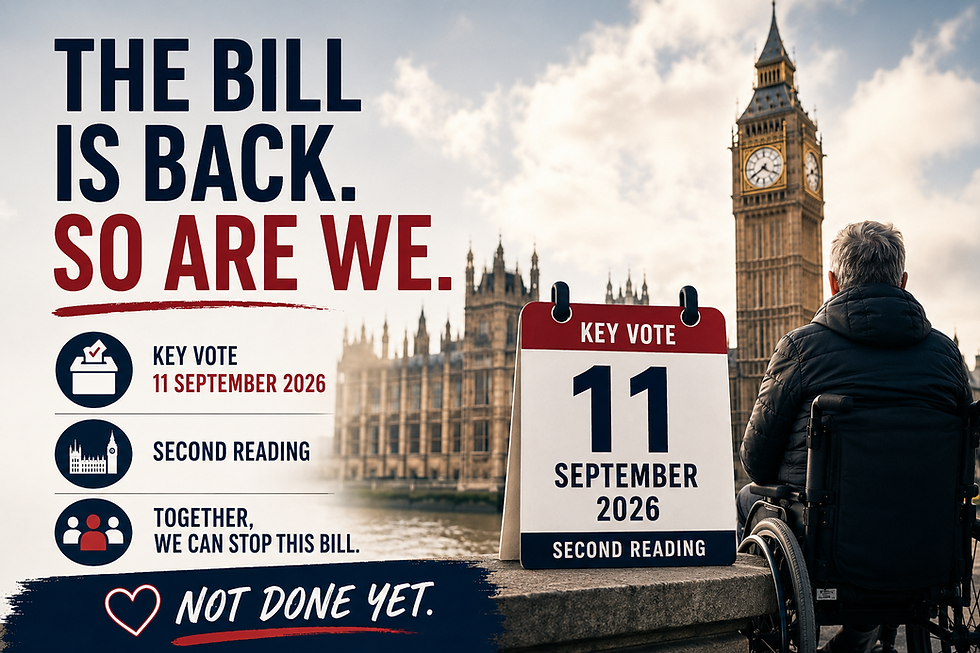
On 17 June, Labour MP Lauren Edwards introduced a new assisted dying bill in the House of Commons. The second reading debate is set for 11 September 2026.
If you feel a sense of déjà vu, that's because you should.
This is the same Terminally Ill Adults (End of Life) Bill that Kim Leadbeater brought before Parliament in 2024. The one that spent months being picked apart in the House of Lords. The one that generated more amendments than any bill in parliamentary history — over 1,300 of them, with the debate running to more than 600,000 words. Longer than War and Peace.
All of that happened because the bill was deeply flawed. Peers from across the political spectrum — including disabled peers and medical and legal professionals — identified serious risks to vulnerable and disabled people. Risks of coercion. Risks from inadequate safeguards. Risks rooted in a social care and palliative care system that is nowhere near good enough.
The bill fell in April when Parliament was prorogued (the end of the parliamentary session). Not because the Lords blocked it out of hand, but because there wasn't time to fix it.
So what's different now?
The bill itself: nothing. It is identical.
What has changed is the mood among supporters. Some are already talking about using the Parliament Act — a constitutional mechanism that would allow the Commons to bypass the Lords entirely — if the bill passes the Commons again and faces the same resistance in the upper house.
There are serious questions about whether this is even achievable. The Parliament Act has never been used for a private member's bill in its entire history. It would require a complex set of circumstances to align, and the government has already said it won't be allocating parliamentary time to the bill. But the fact it's being floated at all signals how determined supporters are to get this through, whatever it takes.
Not Dead Yet UK opposes this bill for exactly the same reasons we always have. You cannot offer assisted dying as a genuine choice when palliative care is underfunded, social care is in crisis, and disabled people face constant cuts to their independence and support.
It is not a free choice when the alternatives are so poor.
We are working on our campaign strategy now. Once we are clear about exactly what form our actions will take, we will be back in touch — and we will need your support. We will make it as straightforward as possible to get involved.
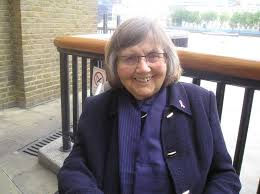
We are also mourning the loss of one of our founding members, Ann Macfarlane OBE, who died this month at the age of 87. Ann was at the last demonstration against this very bill, outside Parliament last winter. [Read our tribute to Ann here — link to obituary post.]
The bill is back. The stakes are high. And we owe it to people like Ann to be ready.